No products in the cart.

Uncategorized
Torque, Speed, and Viscosity: What to Know Before Choosing an Industrial Mixer
30
Jun
Jun
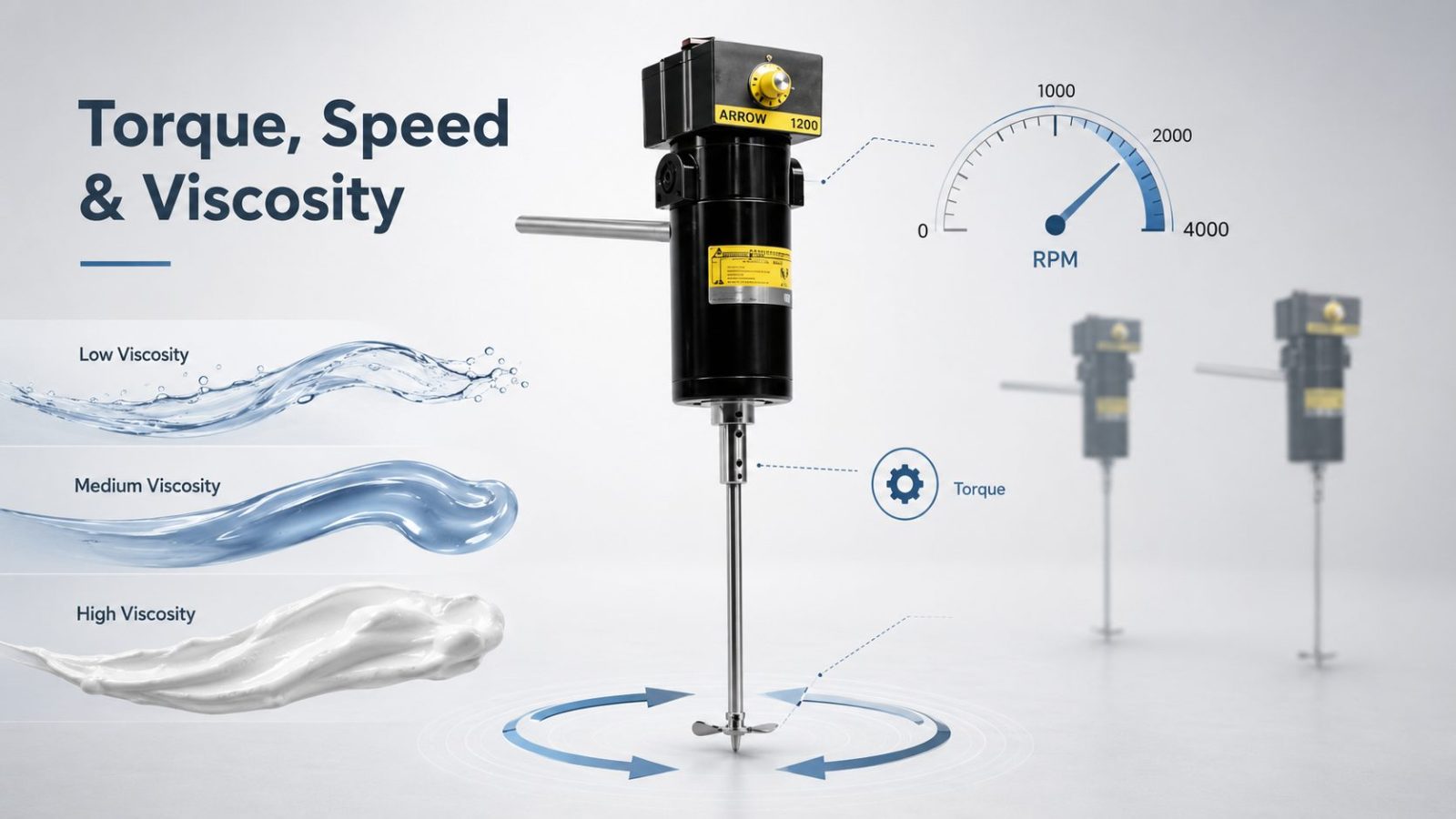
Choosing an industrial mixer is not just about finding the highest RPM. In chemical processing, laboratory work, coatings, adhesives, inks, and cosmetic labs, the better question is how torque, speed, and viscosity work together inside the vessel. A thin solvent, dense slurry, and thick gel will not respond to the same mixer in the same way. The right industrial mixer should match the material, batch size, container, impeller, and production environment to ensure the process remains consistent from test batch to production run.
Start With the Material, Not the Motor
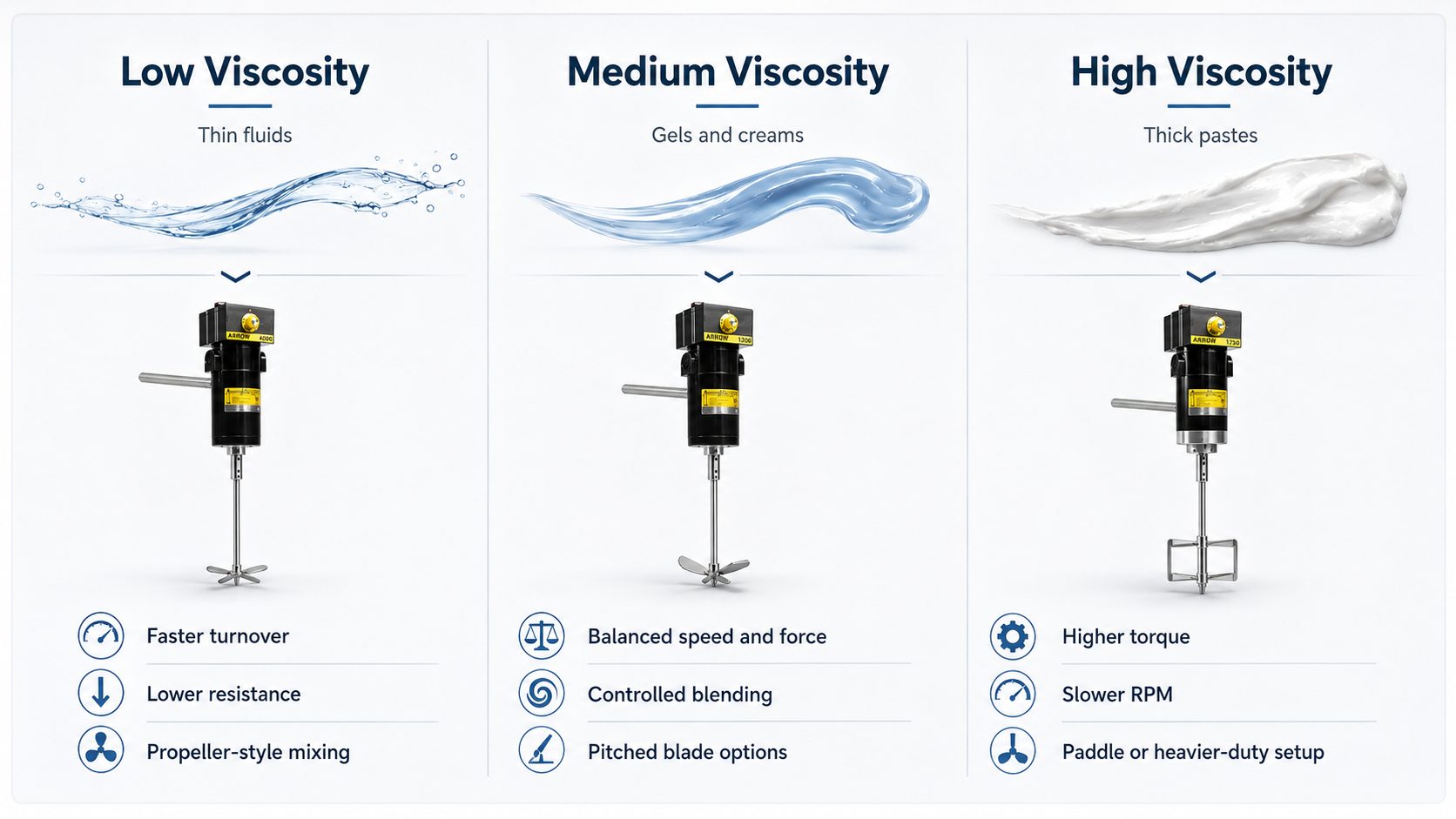
Viscosity should be one of the first details considered when selecting an industrial mixer. Low-viscosity liquids move easily and may need faster turnover to stay uniform. Higher-viscosity materials create more resistance, which means the mixer needs enough power to keep the shaft and impeller moving without stalling.
For example, a light chemical solution may only need fast, steady agitation. A cosmetic gel, pigment-heavy coating, adhesive, or lab slurry may require more torque and a different impeller style to move material from top to bottom. Treating every batch like the same job can lead to uneven blending, dead zones, excess shear, or unnecessary strain on the motor.
Container size also affects mixer selection. A lab beaker, a 5-gallon pail, a drum, a tote, and a tank all create different mixing conditions. Arrow Mixing Products offers clamp-mount and stand-mount configurations, giving teams practical options for drums, tanks, totes, and smaller lab vessels.
Torque Keeps Thick Materials Moving
Torque is the turning force that helps a mixer push through resistance. When materials get thicker, torque often becomes more important than speed. A high-RPM mixer may look powerful on paper, but without enough torque, it can slow down, stall, or fail to create proper circulation.
This is especially important for adhesives, concentrated slurries, resins, gels, coatings, and other high-resistance materials. In these applications, a lower-speed mixer with stronger torque may be more effective than a fast mixer that only moves material near the surface.
Gear drive models are often useful when an application needs more torque at lower speeds. Direct drive models can be a better fit for lighter materials that benefit from faster agitation. Arrow’s air mixer lineup includes both direct-drive and gear-drive options, helping teams choose between higher-speed agitation and lower-speed, higher-torque mixing based on the material.
Speed Should Match the Process Goal
Speed affects more than cycle time. RPM changes how the material moves, how much shear is applied, and whether unwanted air enters the batch.
A speed that is too low may leave powders, pigments, or additives under-mixed. A speed that is too high can cause splashing, vortexing, foaming, air incorporation, or too much shear. This can be a problem in cosmetic labs, chemical formulations, coatings, and other applications where texture, uniformity, and appearance matter.
Variable speed control gives operators more flexibility. A batch may need a slow start to wet out powders, a higher speed for dispersion, and a slower final stage for controlled blending. Arrow’s industrial digital mixers provide clear RPM readouts and repeatable setpoints, making them useful for R&D teams, quality control labs, and small-batch production environments that require tighter process documentation.
The Impeller Changes the Whole Mixing Pattern
The motor provides power, but the impeller determines how the material actually moves. Choosing the wrong impeller can make the right mixer perform like the wrong one.
Propellers are often used for fast turnover in lower-viscosity materials. Pitched blades can support even blending in medium-viscosity batches. Paddles are useful for thicker slurries or materials that need a stronger push through the vessel. The right choice depends on whether the goal is gentle blending, dispersion, emulsifying, suspension, or heavier agitation.
Placement matters too. If the impeller sits too high, it may churn the surface while leaving heavier material at the bottom. If it is too low or too large, it may overload the mixer or create poor circulation. Arrow offers stainless steel shafts, interchangeable impellers, chucks, couplings, and related accessories, allowing teams to fine-tune the mixer setup rather than relying on a one-size-fits-all configuration.
Match the Mixer Type to the Environment
The production environment can narrow the choice between pneumatic, electric, and digital mixers.
Air mixers from Arrow Mixing Products are powered by compressed air, making them a strong option in demanding environments where variable-speed control, portability, and reduced risk of electrical sparking are important. They are often used in applications involving solvents, volatile chemicals, coatings, adhesives, inks, and other industrial materials.
Electric mixers are a practical choice for many lab and production settings where quiet operation, smooth variable speed control, and reliable everyday performance matter. Arrow’s industrial electric mixers include features such as variable speed motors, stainless steel shafts, and interchangeable impellers, helping teams adapt the same equipment to different formulas and batch requirements.
Digital mixers are especially helpful when teams need repeatable settings and clear RPM readouts. For laboratories, quality control teams, and small-batch production, digital control can reduce guesswork and make it easier to document process parameters.
Think About Repeatability Before Scaling
A mixer that works well for a small test batch may not automatically perform the same way in a larger container. Before scaling from R&D to pilot batches or production, document viscosity range, batch size, container dimensions, target RPM, run time, impeller style, shaft length, and mount type.
Even small changes can affect the way material moves through the vessel. A deeper container may need a longer shaft. A thicker formula may need more torque. A larger batch may need a different impeller diameter to maintain proper circulation.
Because Arrow offers pneumatic, electric, and digital mixer styles, along with mounting and accessory options, teams can build around their actual process rather than forcing a single mixer to handle every material the same way.
Choosing the Right Industrial Mixer
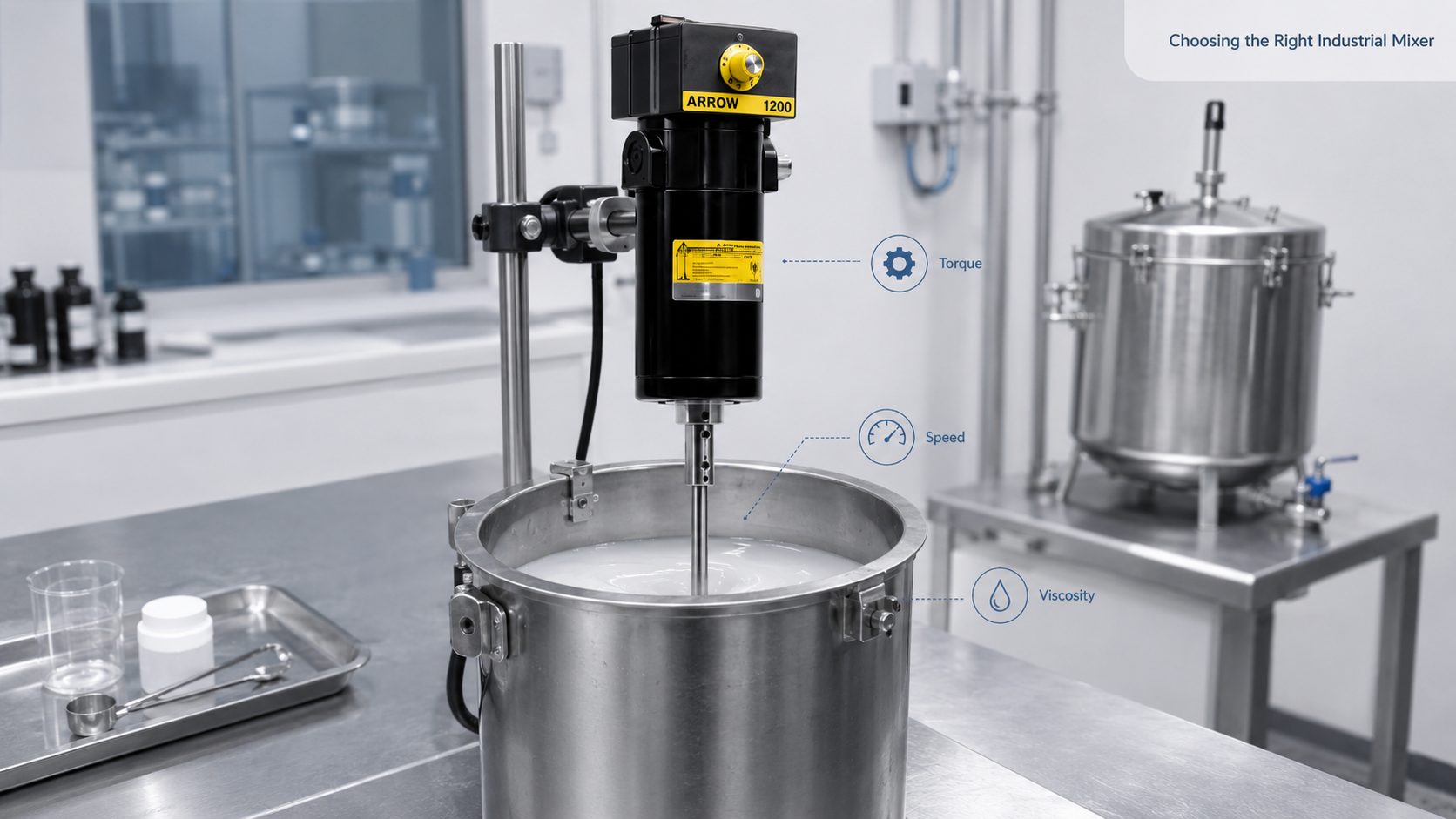
The right industrial mixer depends on the real demands of the batch. Torque, speed, and viscosity should be considered together, along with container size, impeller style, material behavior, and the working environment.
If you are comparing air, electric, or digital mixers for your lab or production environment, contact Arrow Mixing Products. Our team can help you review viscosity, torque, speed, batch size, and impeller options to choose an industrial mixer that fits your process.
FAQs
What is more important in an industrial mixer, torque or speed?
Torque is usually more important for thicker materials, while speed is more important for lower-viscosity liquids that need fast turnover. High RPM alone does not guarantee better mixing if the mixer cannot maintain force under load. For adhesives, gels, slurries, resins, and heavy coatings, a lower-speed mixer with higher torque may provide better circulation and more consistent results than a fast mixer that stalls or draws excess air into the batch.
Why does viscosity matter when choosing an industrial mixer?
Viscosity matters because it determines the resistance the mixer encounters as it moves material through the vessel. Thin liquids usually require less force, while thicker materials need more torque, the right impeller, and the proper shaft placement to avoid dead zones or uneven blending. Before choosing an industrial mixer, teams should consider the material’s full viscosity range, especially if the batch thickens as powders, pigments, or additives are introduced.
When should I choose an air mixer?
An air mixer is often a good choice when compressed air is available, and the mixing environment involves solvents, volatile chemicals, or hazardous vapors. Because pneumatic mixers are powered by compressed air, they can be useful in settings where reducing the risk of electrical sparks is a priority. Arrow air mixers also offer variable-speed control, portability, and clamp- or stand-mount configurations for drums, tanks, totes, and other industrial vessels.
How do I know which impeller to use?
The right impeller depends on the material’s viscosity, the vessel size, and the mixing goal. Propellers are often used for fast turnover in lower-viscosity liquids, pitched blades can support more even blending, and paddles are useful for thicker slurries or heavier materials. If the impeller style, diameter, or placement is wrong, the batch may look active at the surface while remaining poorly mixed at the bottom or edges of the vessel.
Can one industrial mixer handle every type of batch?
One industrial mixer may handle a range of batches, but it should not be expected to perform consistently across all viscosities, vessels, and process goals. A mixer designed for a thin chemical solution may not be the right fit for a dense slurry, a thick coating, or a shear-sensitive cosmetic formulation. Arrow offers pneumatic, electric, and digital mixer options with accessories that help teams better match the setup to the application.
What should I know before contacting Arrow Mixing Products about a mixer?
Before contacting Arrow Mixing Products, it helps to know your material type, viscosity range, batch size, container dimensions, target RPM, and mixing goal. Details such as whether you need blending, dispersion, emulsifying, suspension, or gentle agitation can help narrow down the right mixer and impeller setup. If you are unsure, Arrow can help review the application and recommend a pneumatic, electric, or digital mixer that fits the process.
