No products in the cart.
Industrial Mixers
High-Torque vs. High-Speed Mixers: What Is the Difference?
04
Nov
Nov
Choosing an industrial mixer involves more than finding the highest RPM model. Some materials need a mixer that can move quickly, while others require more force to keep everything moving. Understanding the difference between torque and speed helps you choose equipment that delivers consistent results without unnecessarily straining the motor.
Key Takeaways
- High-torque mixers provide the force needed to move thicker materials like adhesives, gels, and slurries.
- High-speed mixers are generally better suited for thinner liquids that need faster circulation or agitation.
- Higher RPM does not always mean better mixing, especially when working with viscous materials.
- Viscosity, batch size, and impeller design all influence how much torque and speed an application needs.
What Is a High-Torque Mixer?
Torque refers to the turning force a mixer uses to move material through a vessel. The thicker the material, the more resistance the impeller typically encounters. High-torque mixers are designed to handle that resistance without slowing down excessively or stalling, making them useful for adhesives, resins, coatings, and other high-viscosity materials.
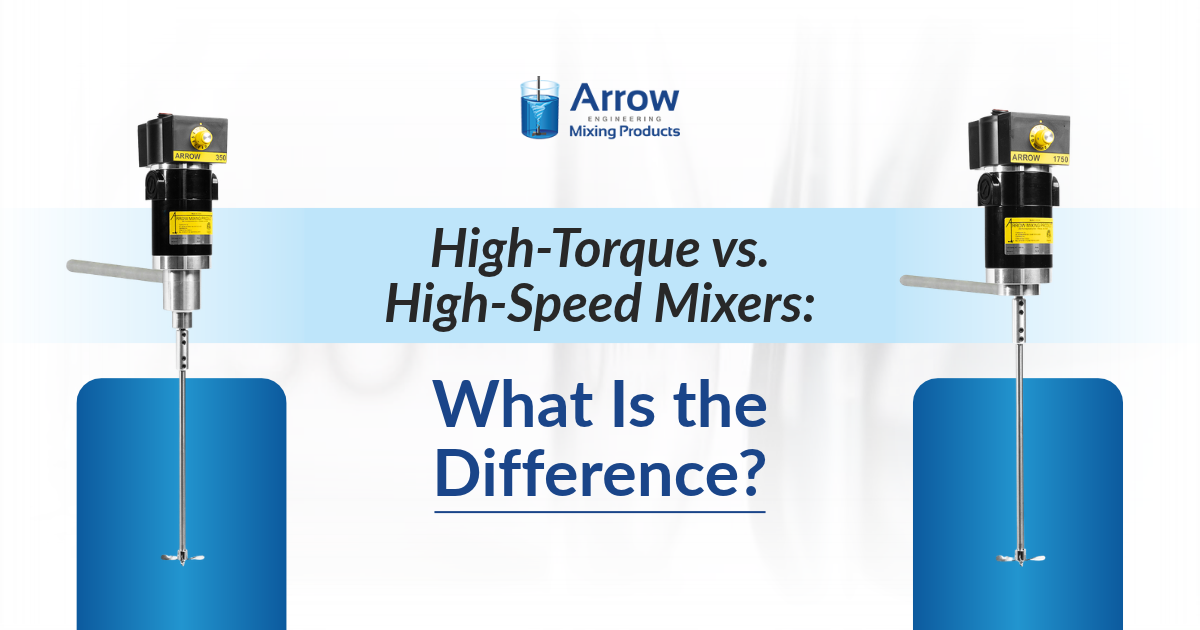
These mixers often operate at lower speeds because the priority is maintaining enough force to move the material. For example, Arrow’s Model 350 electric mixer uses a geared drive to deliver higher torque at lower RPM. This type of setup can be especially useful when a faster mixer struggles to circulate a thick batch.
What Is a High-Speed Mixer?
High-speed mixers rotate the impeller quickly to create circulation and agitation. They’re commonly used for thinner liquids, chemical solutions, and other materials that don’t require as much force to move. Faster rotation can also help with certain blending and dispersion processes where more vigorous agitation is needed.
However, higher speeds don’t always improve results. Running a mixer too fast can cause splashing, introduce unwanted air, or create a vortex that leaves portions of the batch poorly mixed. Arrow’s Model 1750 electric mixer offers speeds up to 2,000 RPM, making it an option for applications where faster agitation is more important than maximum torque.
Why Do Torque and Speed Matter Together?
Torque and speed both contribute to a mixer’s performance, but they serve different purposes. Torque determines how much turning force is available, while RPM measures how quickly the shaft rotates. As Engineering ToolBox explains, the relationship between torque, speed, and motor power helps determine what a motor can deliver under different operating conditions.
The material being mixed is also important. A thin liquid may circulate effectively at higher speeds, while a thick gel may need more torque and a different impeller to achieve the same level of consistency. The University of Michigan also explains how impeller design affects how materials move through a vessel. Choosing the right combination helps prevent dead zones, uneven blending, and unnecessary wear on equipment.
How Do You Choose Between High-Torque and High-Speed Mixers?
Start by considering your material’s viscosity and what you need the mixing process to accomplish. Thin liquids generally require less turning force, while thicker materials need enough torque to keep the impeller moving. Batch size, vessel dimensions, and whether you’re blending, dispersing, or suspending solids should also influence your decision.
Consider how the material changes during mixing. Some formulas become thicker as ingredients are added, which can increase the load on the motor. Arrow offers a range of industrial electric mixers with different torque and speed capabilities to accommodate these requirements. Matching the mixer to the application from the start can improve consistency and reduce unnecessary strain on the equipment.
Find the Right Industrial Mixer for Your Application
Whether your application needs higher torque, faster agitation, or both, the right equipment can improve mixing performance. At Arrow Mixing Products, we offer industrial mixers for a wide range of materials and applications. Contact our team to discuss your mixing requirements and find the right equipment for your process.
