No products in the cart.
Uncategorized
Pneumatic Air Mixers: The Best Choice for Safe and Reliable Mixing in Hazardous Environments
28
Mar
Mar
When working in hazardous environments, safety isn’t an option—it’s a requirement. Whether dealing with volatile chemicals, combustible solvents, or flammable gases, industries such as chemical engineering, laboratories, and cosmetic labs need a mixing solution that minimizes risk. Pneumatic air mixers stand out as the best option for professionals needing reliable, explosion-proof performance. These mixers offer durability, efficiency, and safety in environments where traditional electric mixers could pose a serious hazard.

What Are Pneumatic Air Mixers?
Pneumatic air mixers use compressed air to generate rotational force, eliminating the need for electricity. This design makes them ideal for hazardous locations where sparks could ignite flammable materials. Instead of relying on motors with electrical currents, these mixers harness air power to achieve high-speed, consistent mixing.
At Arrow Mixing Products, we provide industrial-grade air mixers engineered for professionals working with volatile substances. Our products are designed for precision, durability, and compliance with strict safety regulations.
Key Advantages of Pneumatic Air Mixers
Choosing the right mixer for hazardous applications requires an understanding of safety, efficiency, and long-term reliability. Here’s why pneumatic air mixers are the preferred solution in industrial settings:
1. Explosion-Proof Operation
Unlike electric mixers, air mixers do not generate sparks or heat, making them inherently explosion-proof. This critical feature ensures safe operation in chemical plants, R&D laboratories, and industrial settings handling highly combustible liquids.
2. Reliable and Consistent Performance
Pneumatic air mixers deliver high torque and adjustable speed control, ensuring optimal performance for various mixing applications. Whether working with high-viscosity resins, solvents, or corrosive chemicals, air-powered mixers maintain steady operation without overheating or experiencing motor burnout.
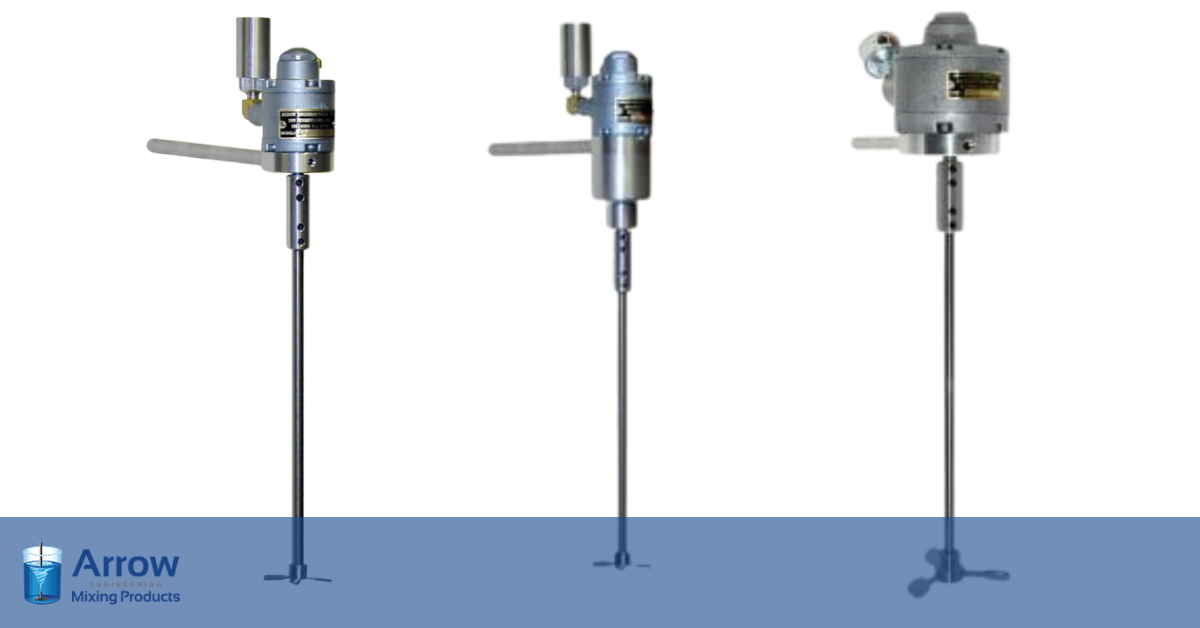
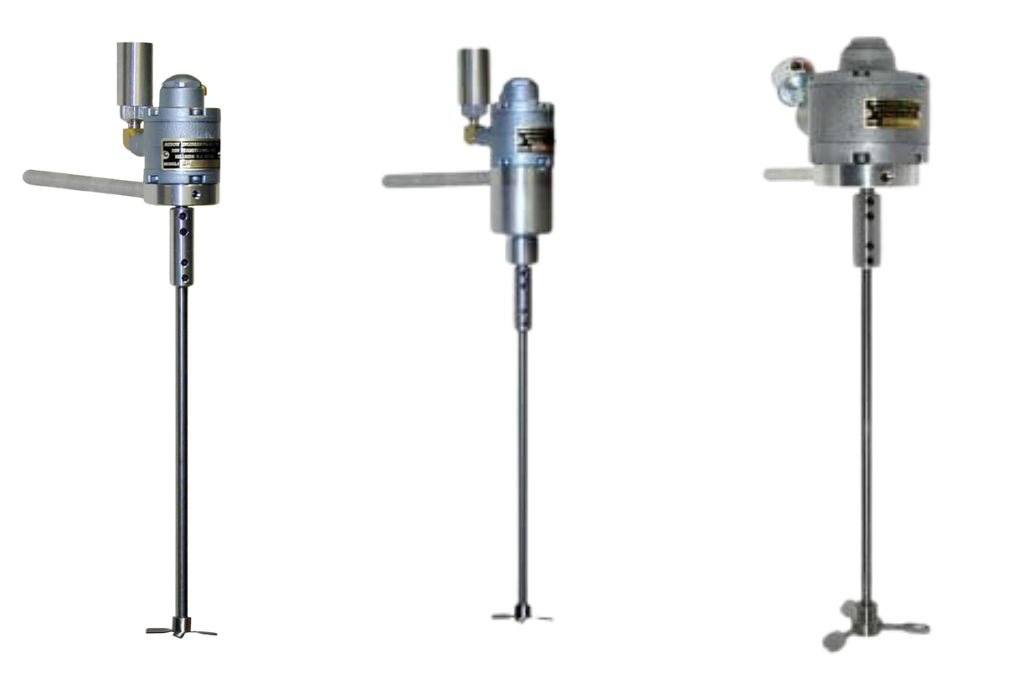
Arrow offers both reversible and non-reversible air mixers capable of handling high-speed, high-torque mixing applications. Each overhead stirrer comes equipped with a needle valve to control mixing speed, providing precision and flexibility for demanding tasks.
3. Minimal Maintenance and Longevity
With fewer moving parts than electric alternatives, air mixers experience less wear and tear. This translates to lower maintenance costs, fewer breakdowns, and longer operational life. Since they don’t rely on electrical components, they also withstand exposure to dust, moisture, and chemical vapors without suffering internal damage.
For the best results and extended mixer life, we recommend using a filter/regulator in the air supply and an air-line lubricator to keep the motor running smoothly.
4. Versatility Across Applications
From cosmetic formulation to chemical blending and industrial coatings, pneumatic air mixers accommodate a wide range of mixing needs. Adjustable speed and interchangeable impeller designs allow professionals to customize mixing power and flow based on the specific requirements of their applications.
Each explosion-proof air-driven mixer comes standard with:
- An aluminum support rod
- A four-foot air hose
- A 316 stainless steel shaft and propeller
Built for reliability and ideal performance, these mixers ensure consistent results in demanding applications and are designed to meet the rigorous demands of various industries.
5. Fast and Easy Installation
Arrow’s pneumatic air mixers are designed for quick setup and seamless integration into existing systems. With lightweight and portable designs, these mixers can be easily moved between workstations or installed on tanks, drums, or totes.
Choosing the Right Air Mixer for Your Needs
Selecting the right air mixer depends on several factors, including:
- Tank size and material – Ensure compatibility with drum or tote dimensions.
- Viscosity of materials – Different impellers and speeds accommodate varying viscosities.
- Mixing speed requirements – Adjustable controls allow for customized performance.
- Regulatory compliance – Our mixers meet industry safety standards for hazardous environments.
Arrow Mixing Products provides expert guidance to help professionals choose the best air mixer for their application. With decades of industry experience, our team ensures you get a reliable, high-performance solution tailored to your needs.
Why Arrow Mixing Products?
With a legacy dating back to 1945, Arrow Mixing Products has been a trusted name in industrial mixing solutions. Our pneumatic air mixers are hand-assembled, rigorously tested, and backed by a 30-day satisfaction guarantee. Additional benefits of choosing Arrow include:
- 1-year warranty on all mixers
- Repair service available for minimal downtime
- Repair parts at cost only, ensuring affordability
- Fast, 1-2 business day service with shipping available nationwide and internationally
- Competitive pricing without compromising quality
Get the Best Mixing Solution for Hazardous Environments
If safety, reliability, and efficiency are top priorities for your mixing applications, pneumatic air mixers are the best choice. Arrow Mixing Products offers top-tier air mixers designed to meet the toughest industrial demands. Contact us today to learn more about our available air-powered stirrers or explore our selection of pneumatic air mixers and experience the Arrow difference.
FAQs
Why are pneumatic air mixers safer than electric mixers in hazardous environments?
Pneumatic air mixers are safer in hazardous environments because they operate on compressed air rather than electricity, reducing the risk of sparks, electrical ignition, and motor overheating. This makes them a practical choice for facilities working with flammable vapors, combustible solvents, volatile chemicals, or other materials where ignition risks must be carefully controlled.
What types of materials can be mixed with pneumatic air mixers?
Pneumatic air mixers are commonly used for solvents, resins, coatings, adhesives, sealants, corrosive chemicals, and cosmetic formulations. The right mixer depends on the material’s viscosity, batch size, container type, and desired mixing action. For more demanding materials, factors like torque, shaft length, propeller style, and speed control become especially important.
Do pneumatic air mixers require special air supply equipment?
Yes, pneumatic air mixers perform best with a clean, properly regulated air supply. Arrow Mixing Products recommends using a filter/regulator and an air-line lubricator to help protect the motor, maintain smooth operation, and extend mixer life. Proper air preparation can also help reduce wear, improve consistency, and prevent performance issues during repeated use.
How do I choose the right pneumatic mixer for my application?
Choosing the right pneumatic mixer starts with understanding your material, container, and process goal. Important factors include tank or drum size, material viscosity, desired speed range, torque requirements, and whether the mixer needs to be portable or mounted in place. Arrow Mixing Products can help match the correct mixer setup to your specific application.
Can pneumatic air mixers handle high-viscosity materials?
Many pneumatic air mixers can handle higher-viscosity materials when properly matched to the application. Thick resins, coatings, and chemical blends may require higher torque, the right propeller or impeller, and proper speed control to achieve consistent movement throughout the vessel. Matching the mixer to the material helps prevent under-mixing, strain, and inefficient batch results.
What maintenance do pneumatic air mixers need?
Pneumatic air mixers typically require less maintenance than electric mixers, but routine care is still important. Facilities should keep the air supply clean, use proper lubrication, inspect hoses and fittings, and check the shaft and propeller for wear or buildup. Arrow also offers repair service and repair parts at cost to help reduce downtime and extend equipment life.
